Freshly cleaned furniture can feel slightly damp after a deep cleaning appointment, and that does not always mean something went wrong. The drying time depends on the fabric, cushion thickness, amount of moisture used, extraction strength, room temperature, humidity, and airflow.
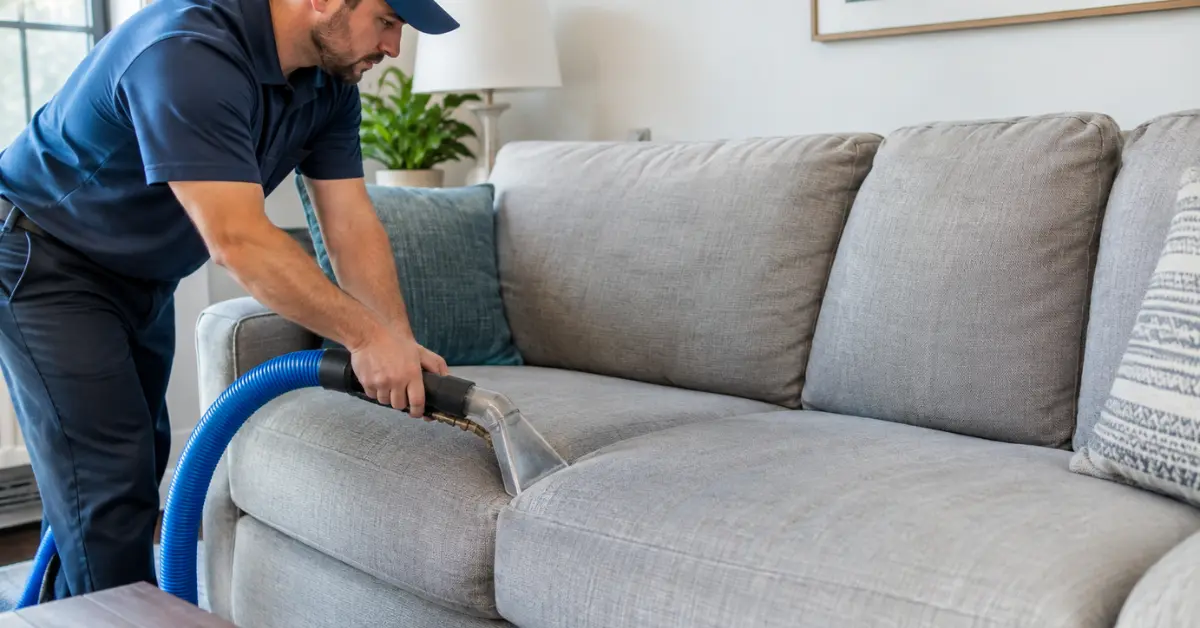
A commercial upholstery steam cleaner can help remove embedded dirt while extraction equipment pulls moisture from the fabric. Machines designed for steam and extraction can use vacuum power to remove excess water, which supports faster drying.
For Denver homeowners, drying can also vary from one room to another. A well ventilated living room may dry faster than a closed bedroom with limited airflow. The same is true for furniture in areas such as Capitol Hill, Cherry Creek, Washington Park, Five Points, or Central Park.
How Long Does Furniture Usually Take to Dry?
After professional upholstery cleaning, furniture often feels damp rather than fully wet. Drying commonly takes about 2 to 6 hours, but thick cushions, dense fabrics, high humidity, poor airflow, and heavier moisture can extend that window. Strong extraction, good ventilation, and space between cushions usually help furniture dry faster.
Lightweight upholstery and thinner cushions may become comfortable to use sooner. Heavy sofas, padded armchairs, sectional cushions, and tightly woven materials can retain moisture longer because water takes more time to move out of deeper layers.
The cleaning method also matters. Some equipment uses steam or hot water with extraction, while other machines are designed around lower-moisture vapor cleaning. US STEAM notes that different commercial machines vary in vacuum capability and moisture levels, so equipment type can affect the drying process.
What Makes Upholstery Dry Faster After Cleaning?
Several simple factors can shorten the drying period without putting unnecessary stress on the fabric.
Improve Air Movement Around the Furniture
Open nearby doors and windows when outdoor conditions are suitable. Ceiling fans, portable fans, and normal HVAC circulation can also move moisture away from the upholstery.
Do not point extremely strong heat directly at delicate fabric. Gradual airflow is generally a better approach than trying to force the furniture dry with excessive heat.
Give Cushions Room to Breathe
If removable cushions are safe to separate, create space between them so air can reach more surfaces. Avoid stacking damp cushions together because trapped moisture has fewer opportunities to escape.
Furniture should also have enough clearance from walls when possible. Better circulation around the back and sides can help reduce the time moisture remains in the fabric.
Does Equipment Type Affect Furniture Drying Time?
Yes. A commercial upholstery steam cleaner may be paired with extraction equipment that removes moisture during the cleaning process. The amount of water left behind depends on the cleaning method, fabric condition, technician technique, and equipment configuration.
A professional upholstery steam cleaner or upholstery steam cleaning machine should be used according to the material being cleaned. Some upholstery fabrics can tolerate moisture-based cleaning well, while others require a more controlled approach.
Commercial upholstery cleaning equipment can also include vacuum extraction designed for soft surfaces. Manufacturer documentation for commercial steam vacuum systems shows that extraction and vacuum functions can be used on furniture and other soft surfaces specifically to remove excess water and support faster drying.
This is one reason simply comparing machine power is not enough. Proper moisture control, extraction technique, fabric knowledge, and careful application all influence the final drying time.
What Should You Do Immediately After Upholstery Cleaning?
Once cleaning is complete, a few practical steps can make the rest of the drying process easier.
- Keep furniture uncovered. Remove blankets, throws, and other items that can trap moisture against the fabric.
- Separate removable cushions. Give each piece room for air to circulate when the upholstery allows it.
- Increase airflow. Use fans or normal HVAC circulation to keep air moving through the room.
- Avoid heavy use. Give the furniture time to dry before sitting on it for extended periods.
- Check deeper areas. Feel along seams, cushion edges, and thick padded sections because these areas may remain damp longer.
- Follow fabric-specific instructions. The recommended drying process can vary depending on upholstery material and construction.
If you also maintain carpets between professional visits, the tip for carpet cleaners in Commerce City can provide additional cleaning and maintenance guidance for Denver-area homes.
When Is Upholstery Dry Enough to Use?
Furniture does not necessarily need to feel completely dry immediately after cleaning, but it should not remain noticeably wet for an extended period. Before regular use, check the surface, seams, cushion edges, and areas underneath removable cushions.
If the fabric feels cool and slightly damp, give it more time and increase airflow. If it remains heavily wet several hours later, contact the cleaning provider so they can determine whether additional extraction or another step is appropriate.
A professional upholstery cleaning machine with effective extraction can reduce excess moisture, but drying still depends on the furniture itself and the environment where it was cleaned. The goal is not simply to make the surface feel dry quickly. The deeper layers need enough time to release retained moisture.
How Denver Homeowners Can Prepare Furniture for Faster Drying
Preparing the room before cleaning can make the entire process easier. Clear small items from the furniture and provide technicians with enough access to the sofa, chairs, ottomans, or other pieces.
Denver homes can have different indoor conditions depending on the season and ventilation setup. A room with steady air movement may dry faster than a closed space with little circulation.
If you live in Denver neighborhoods such as Capitol Hill, Cherry Creek, Washington Park, Five Points, or Central Park, the same basic preparation principles apply. Keep cleaned furniture exposed to circulating air and avoid placing heavy coverings over it while moisture is still present.
It is also useful to mention any delicate fabrics, previous cleaning problems, stains, or odor concerns before work begins. That information helps determine the most suitable cleaning and drying approach.
When Should You Schedule Professional Upholstery Cleaning?
Professional cleaning can be useful when furniture has accumulated visible dirt, food spills, pet-related messes, odors, or everyday buildup that normal vacuuming cannot remove.
Ever Steam’s upholstery service includes a pre-clean inspection, deep cleaning, specialized stain removal, and pet and odor treatment options. The company describes its service as an in-home upholstery cleaning process for sofas, chairs, ottomans, headboards, and other upholstered furniture.
For professional upholstery cleaning in Denver, schedule upholstery cleaning services as the next step when your furniture needs a deeper clean.
For service questions, call (720)-850-3316 to request a quote. The business location is 13121 Elmendorf Pl Denver, CO 80239.
How Can You Keep Clean Furniture Dry and Fresh Longer?
After upholstery cleaning, regular vacuuming and quick attention to new spills can help maintain the results. Avoid leaving wet items, damp blankets, or heavily soiled materials on cleaned furniture.
Routine care is especially helpful for sofas and chairs used every day. Pet owners may also benefit from addressing stains and odors quickly instead of allowing them to become deeply embedded.
When professional cleaning is needed, commercial upholstery steam cleaner equipment can support deep cleaning and moisture extraction when used correctly. The final drying time still depends on the fabric, furniture construction, room conditions, and cleaning process.
For Denver homeowners looking for local upholstery care, Ever Steam Carpet Cleaning LLC provides upholstery cleaning as part of its locally owned service offering.
Frequently Asked Questions
How long should a sofa stay unused after professional cleaning?
Most upholstery can be used once it feels dry to the touch, but thicker cushions may need several additional hours. A common drying window is around 2 to 6 hours, although fabric type, moisture level, ventilation, room humidity, and cushion thickness can change that timeframe.
Does professional upholstery cleaning include drying?
Professional cleaning normally includes moisture extraction as part of the cleaning process when water-based extraction is used. The equipment and method can remove a substantial amount of moisture, but the furniture still needs time to air dry afterward. Good airflow can help complete the process more quickly.
Can I use a fan to dry cleaned furniture?
Yes. A normal household fan can improve air circulation around freshly cleaned furniture. Position it so air moves across the upholstery rather than applying excessive direct heat. Opening windows may also help when outdoor conditions are suitable, while your home’s HVAC system can support general air movement.
What happens if furniture stays damp for too long?
Extended dampness can create an unpleasant environment for upholstery and may contribute to odor or other moisture-related problems. If furniture remains significantly wet well beyond the expected drying period, contact the cleaning provider. They can assess the material and determine whether additional extraction or another step is needed.
Does upholstery cleaning cost more for large furniture?
Pricing can vary based on furniture size, number of pieces, fabric type, condition, stains, odor treatment, and the cleaning method required. Sectionals and heavily soiled furniture may require more time than a small chair. The best way to determine the actual cost is to request a quote based on the specific furniture.
Do Denver upholstery cleaners serve areas outside central Denver?
Coverage depends on the individual cleaning company. Denver-based providers may serve multiple neighborhoods and nearby communities, but availability can vary by appointment and location. When scheduling, provide the exact service area and furniture details so the provider can confirm coverage and quote the work accurately.
What should I remove before an upholstery cleaning appointment?
Remove personal items, loose blankets, decorative objects, and anything that could block access to the furniture. If possible, clear the surrounding floor area as well. Tell the technician about delicate fabrics, previous cleaning attempts, stains, pet issues, or other concerns before the cleaning begins.